


Crypto assets as payment option


CBAP (CIBA), GTP (SAIT)
Published On
Updated On
Update Due
Watch: two minutes
The Precision 7 System: every exchange, wallet, chain and DeFi position reconciled and verified, then reported.
Book a free exploratory callCrypto asset payments have all seen significant growth in recent years. Digital assets enable faster, more flexible, and more innovative payments and ways of doing business. In addition, retailers, individuals, and businesses are increasingly accepting crypto assets as payments. Payment gateways are making it easier to accept crypto as payment by eliminating the need for you to copy addresses. Crypto debit or credit cards also make fiat payments possible with the crypto in your linked account.
Understanding crypto assets
Bitcoin began with a white paper written by “Satoshi Nakamoto” published in 2008 (Schar,2018). It was sent via a cryptography email list and looked like academic work. The original goal of Bitcoin’s inventors was to create a cash-like payment system that allowed for electronic transactions while also retaining many of the benefits of actual cash. To better comprehend the unique characteristics of physical monetary units and the urge to generate digital currency.
How do crypto asset payments work?
Payments through bitcoin will be done by firms that accept the perceived risk of crypto asset payments by facilitating transactions between merchants and their consumers through their wallet(s). At its most basic, a crypto payment transfers crypto assets from one wallet to another.
Why does an individual/business need to understand all these different payment methods or systems? Times are changing, and one needs to understand or adapt to the times. With the world moving forward in the direction of digital assets.
Gone are the days of taking your chequebook into places and purchasing items or wants and needs by writing a simple cheque. The times moved on! The next best thing in your hand was your credit card, the next big hype.
Yet again, the time has moved on! People are now paying with their mobile phones, and the card in hand is almost non-existent.
Has time moved on again? It now allows the world to pay via crypto exchanges at no extra charge? Indeed, it has.
Step-by-step process for processing crypto payments:
- Your customer / client decides to make the payment via crypto asset and would like to check out (in-store, online or in the app).
- The amount payable would be equal to the fair market value of the digital asset at the moment of the exchange.
- The crypto asset payment provider promptly transforms the payment into the coin you specify.
- The funds are added to your provider’s account and deposited into your bank account at intervals determined by your service contract.
4 Benefits of using a crypto payment method
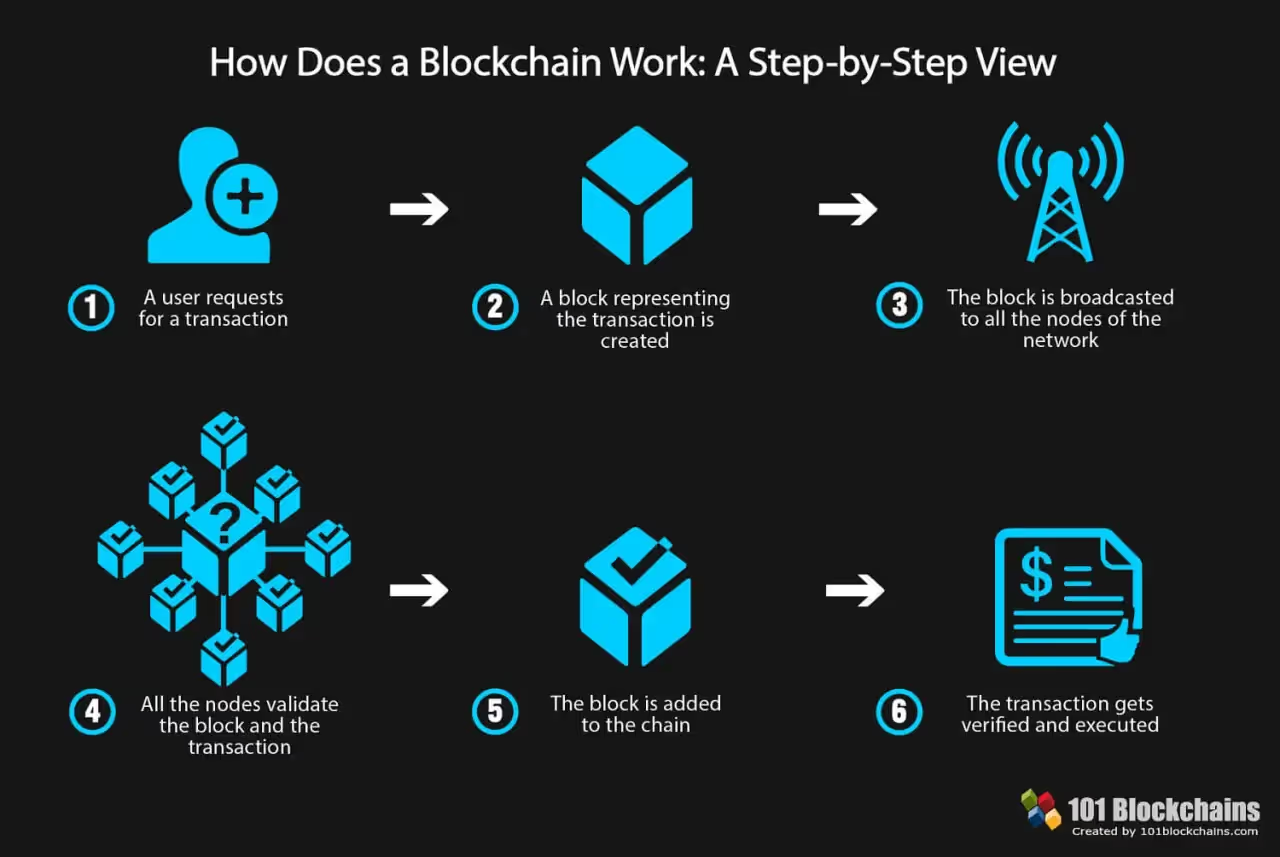
- A cryptocurrency transaction is typically a quick and simple process. Bitcoins, for example, can be transferred from one digital wallet to another using nothing more than a smartphone or computer.
- Every cryptocurrency transaction is recorded in a public list known as the blockchain, which is the technology that allows cryptocurrency to exist. This allows you to trace the history of Bitcoins and prevent people from spending coins you don’t own, making copies, or undoing transactions.
- Blockchain aims to eliminate intermediaries such as banks and online marketplaces, therefore there are no payment processing fees.
- Cryptocurrency payments are becoming more popular, particularly among large organizations and industries.
Conclusion
Traditional payments, particularly international transactions, are frequently fraught with high risks and restrictions.
A decentralized payment gateway, such as Coinbase and Valr Pay, accepts multiple different cryptocurrencies. Payments are also much safer and less vulnerable to malicious attacks due to the system’s decentralized nature. There is no human element involved, which reduces both fraud and mistakes. You cannot change a payment once it has been recorded and confirmed on the Blockchain. Add to that the elimination of financial intermediaries reduces payment administration and red tape, and you have a very satisfying cross-border payment experience for both consumers and merchants.
No more frozen accounts owing to hidden terms, and no more restrictions based on your location. It’s straightforward, low-cost cross-border payments that arrive swiftly and securely.
You are welcome to contact the CountDeFi team to find out more.
Official Sources
- IRS: Notice 2014-21: the guidance treating virtual currency as property, including payments for goods and services.
- IRS: Digital Assets: the central IRS page covering digital asset transactions and reporting.
- IRS: FAQs on Virtual Currency Transactions: IRS answers on paying for goods and services with digital assets.
- IRS: About Form 8300: the reporting rules for businesses receiving large cash and digital asset payments.
- IRS: About Form 8949: the form where a disposal of a digital asset is reported.
Frequently Asked Questions
What actually happens when someone pays with crypto?
At its most basic, a crypto payment transfers crypto assets from one wallet to another. Payment providers facilitate the transaction between merchants and their customers through their wallets, and payment gateways remove the need to copy addresses manually.
How is the amount of a crypto payment determined?
The amount payable is equal to the fair market value of the digital asset at the moment of the exchange.
How does a merchant receive the money?
The crypto asset payment provider converts the payment into the coin the merchant specifies. The funds are added to the provider account and deposited into the merchant bank account at intervals determined by the service contract.
Can a crypto payment be reversed once it is made?
No. A payment cannot be changed once it has been recorded and confirmed on the blockchain. Every transaction is recorded on a public list, which allows the history of the coins to be traced.
What are the benefits of accepting crypto as a payment method?
Transfers are typically quick and can be made from a smartphone or computer. Removing intermediaries such as banks and online marketplaces reduces payment administration, and the decentralised structure removes much of the human element that leads to fraud and mistakes.
Do crypto debit and credit cards work the same way?
They make fiat payments possible using the crypto held in the linked account, so the spending happens in local currency while the funding sits in digital assets.
Master the topic: Can the IRS Track My Crypto in 2026? Yes.
Chris Herbst is the founder of CountDeFi, a crypto tax specialist whose qualifications span investment management, financial analysis, mathematical statistics and computer science. He holds the Chartered Business Accountant in Practice (CBAP) designation with the Chartered Institute for Business Accountants (CIBA) and the General Tax Practitioner (GTP) designation with the South African Institute of Taxation (SAIT). His combined background in investments, accounting and tax, mathematical statistics and computer science underpins his work in complex crypto tax reporting. This article is for educational purposes only and does not constitute tax, legal or investment advice. Consult a qualified tax professional for guidance specific to your situation. View our Editorial Policy.

